
Salads
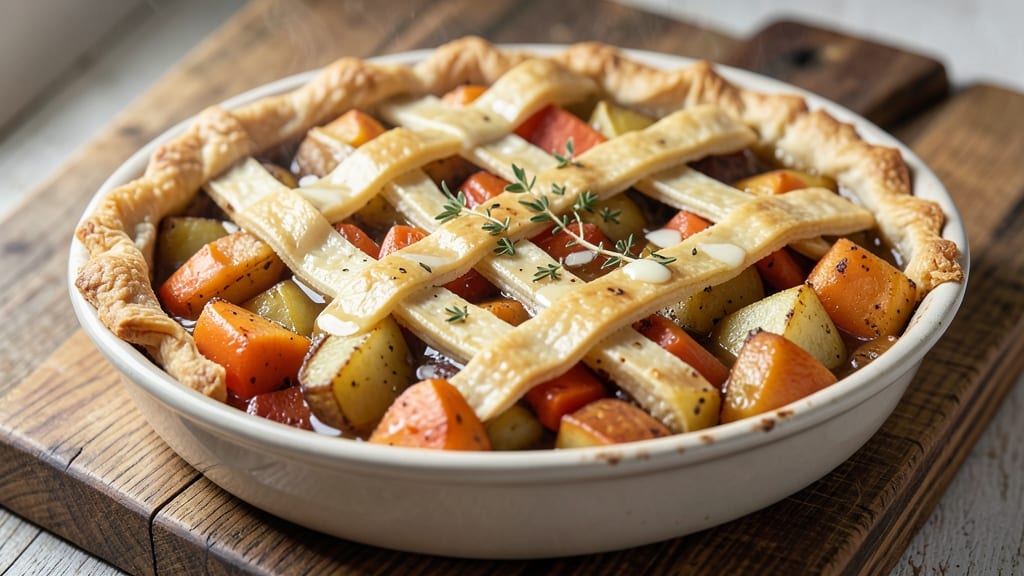
This root vegetable pot pie recipe transforms humble winter produce into a comforting centerpiece that feels like a warm hug on a chilly evening.
The secret lies in a flaky crust that encases tender carrots, parsnips, and potatoes in a velvety cream sauce, creating layers of texture and flavor that balance richness with earthy sweetness.
I developed this version after years of perfecting the balance between a crisp, golden crust and a filling that stays moist through baking—no soggy bottoms here.
The foundation begins with a blind-baked crust, a professional technique that ensures the bottom stays crisp while the filling bakes to creamy perfection. You'll start by roasting the vegetables until caramelized, which deepens their natural sweetness and intensifies the overall flavor profile.
The filling then simmers in a rich cream sauce infused with thyme and garlic, creating a luscious base that holds together beautifully when topped with the crust.
By the time it emerges from the oven, you'll have a golden, bubbling pot pie with a shatteringly crisp crust and a filling so tender it practically melts in your mouth. The aroma alone—warm, buttery, and infused with caramelized vegetables—will have everyone gathering around the table.
This dish is hearty enough to stand alone but pairs beautifully with a simple green salad or crusty bread to soak up every last drop of that creamy sauce.
Whether you're preparing for a cozy family dinner or meal prepping for the week, this pot pie delivers restaurant-quality results with minimal effort. The recipe includes options for gluten-free crusts or vegan cheese alternatives, ensuring everyone at the table can enjoy it.
Let's get started on creating a dish that feels like home.
Ingredients for root vegetable pot pie
Six hearty ingredients create a pot pie that tastes like autumn in a dish.
| Ingredient | Amount | Notes |
|---|---|---|
| Carrots 🥕 | 2 lbs | Medium, whole with tops removed |
| Parsnips 🥕 | 2 lbs | Medium, peeled and cut into chunks |
| Russet Potatoes 🥔 | 3 lbs | Peeled and cut into 1-inch cubes |
| Unsalted Butter 🧈 | ¾ cup | Cold, cubed for crust |
| All-Purpose Flour 🌾 | 2 ½ cups | Plus extra for dusting |
| Ice Water 💧 | ½ cup | For dough elasticity |
| Heavy Cream 🥛 | 1 ½ cups | Full-fat for richness |
| Whole Milk 🥛 | ½ cup | Warmed for sauce |
| Fresh Thyme 🌿 | ¼ cup | Chopped, stems removed |
| Garlic Cloves 🧄 | 4 cloves | Minced, for depth |
| Diamond Crystal Kosher Salt 🧂 | 1 ½ tsp | For seasoning and crust |
| Freshly Ground Black Pepper 🌶️ | ½ tsp | Cracked peppercorns |
| Shredded Gruyère Cheese 🧀 | 1 cup | Freshly grated for melt |
| Olive Oil 🫒 | 2 tbsp | For roasting vegetables |
The vegetables are the soul of this pie, so don't cut corners. Local farmers markets often have the sweetest parsnips and carrots—look for vibrant color and firm texture. If you're using frozen, thaw and pat dry thoroughly before roasting. For the potatoes, Russets are non-negotiable—they hold their shape and absorb flavors beautifully. The Gruyère? Willy Wonka or Cowgirl Creamery are my go-tos, but any good aged cheese with melt will work. Pro tip: roast the veggies until caramelized—they should be tender but still hold their shape when pierced with a fork.
No thyme? Fresh rosemary at half the amount works in a pinch, though it's more assertive. Short on heavy cream? Full-fat Greek yogurt plus 1 tbsp melted butter mimics the richness. The crust can be made gluten-free by swapping the flour for a 1:1 blend like Bob's Red Mill. For a vegan option, use vegan butter and plant-based milk, but expect slightly less flakiness. The olive oil matters here—use something with low smoke point like extra-light olive oil for roasting, not fruity EVOO. And trust me on the kosher salt—it dissolves better than table salt for seasoning.
This pie reheats beautifully—just 15 minutes at 375°F until bubbly. Store leftovers covered for 4 days in the fridge or freeze for 3 months. I always make a double batch because it reheats even better the second time. For meal prep, portion into individual pie dishes and freeze unbaked—just add 10 minutes to the baking time. The crust stays crispy if you bake it straight from frozen, no thawing needed.
Why You'll Love This Recipe
- Pantry-Friendly Magic: I swear, this pie comes together with stuff I always have—no fancy shopping required. Carrots, parsnips, and potatoes? That’s half my fridge. The butter and flour? My go-to staples. Honestly, I’ve made this three times in a row when I forgot to meal prep.
- Creamy-Crisp Perfection: That golden crust over a silky filling? It’s the real deal. The butter-flour roux thickens into a velvety sauce, while the veggies caramelize just enough to add depth. Between us, the first bite makes me pause—even if the pie isn’t the prettiest, the taste is.
- Weeknight to Holiday: Serve it steaming with crusty bread when you’ve got 20 minutes, or bring it to a potluck and watch it disappear. I’ll be real: my family’s been asking for this since Thanksgiving, and it’s just as welcome on a Tuesday night as it is at a dinner party.
- Zero-Waste Comfort: Leftovers? Please. This pie actually tastes better the next day—if it lasts that long. And since it’s packed with budget-friendly roots, I’m not stressing about food going bad. Not the prettiest, but the taste makes up for it every time.
Step-by-step instructions for root vegetable pot pie
Here's how to create a golden, flaky crust that perfectly encases tender root vegetables and a velvety cream sauce.
Roast the Vegetables Until Caramelized
Preheat your oven to 400°F and line two large baking sheets with parchment paper. Toss the peeled and cubed 3 lbs russet potatoes, 2 lbs carrots, and 2 lbs parsnips with 2 tbsp olive oil, 1 tsp Diamond Crystal kosher salt, and ¼ tsp freshly ground black pepper. Spread them evenly in a single layer on the baking sheets.
Roast for 30-35 minutes, stirring once halfway through, until the vegetables are tender and their edges begin to caramelize. You'll know they're ready when they pierce easily with a fork and develop a deep golden hue. This roasting step builds natural sweetness that elevates the entire dish.
Prepare the Cream Sauce for Richness
While the vegetables roast, melt 0.75 cup unsalted butter in a large saucepan over medium heat. Add the 4 minced garlic cloves and 0.25 cup chopped fresh thyme, cooking for 1 minute until fragrant but not browned. This prevents bitterness and infuses the sauce with aromatic depth.
Pour in the 1.5 cups heavy cream and 0.5 cup whole milk, stirring constantly. Bring to a gentle simmer, then reduce heat to low and let it thicken slightly for 5-7 minutes. Remove from heat and stir in the 1 cup shredded Gruyère cheese until completely melted and smooth. Season with the remaining 0.5 tsp Diamond Crystal kosher salt and ¼ tsp freshly ground black pepper.
Assemble the Vegetable Layer
Transfer the roasted vegetables to a large mixing bowl and pour the warm cream sauce over them. Gently toss until every vegetable piece is fully coated in the sauce. This ensures each bite delivers that perfect balance of creamy sauce and tender vegetables. The mixture should be hot but not boiling.
Transfer the vegetable mixture to a 9x13-inch baking dish, spreading it evenly. The vegetables should be submerged in sauce but not overflowing. Cover with plastic wrap and refrigerate for 30 minutes to chill completely. This step prevents the crust from becoming soggy when baking.
Create the Signature Flaky Crust
In a large bowl, combine the 2.5 cups all-purpose flour, 1.5 tsp Diamond Crystal kosher salt, and 0.5 tsp freshly ground black pepper. Cut in the 0.75 cup cold unsalted butter using a pastry cutter or your fingers until the mixture resembles coarse crumbs with pea-sized butter pieces remaining.
Drizzle in the 0.5 cup ice water while stirring with a fork until the dough just comes together. Avoid overmixing—this develops gluten and makes the crust tough. Shape the dough into a disk, wrap in plastic, and chill for 30 minutes. On a lightly floured surface, roll the dough to ⅛-inch thickness and transfer it to the baking dish.
Bake to Golden Perfection
Preheat your oven to 375°F. Cut several slits in the dough to allow steam to escape and prevent puffing. Bake for 40-45 minutes until the crust is deep golden brown and the filling is bubbling at the edges. The crust should be crisp along the edges but still tender in the center.
Remove from the oven and let rest for 10 minutes before serving. This resting period allows the filling to set slightly, making it easier to slice. The result should be a pot pie with a shatteringly flaky crust, creamy sauce, and perfectly tender vegetables that melt in your mouth.
Pro Tips For Making Root Vegetable Pot Pie
- PARBOIL POTATOES FIRST: I learned this the hard way—skipping the parboil means your Russets turn to mush under the pie crust. Cut them into even 1-inch chunks, boil 8-10 minutes until just fork-tender, then drain and dry thoroughly. This keeps them creamy inside but holds their shape when baked later.
- PEEL AND GRATE ROOTS UNIFORM: Carrots and parsnips resist even cooking when left in chunks. Use a mandoline for paper-thin slices or grate them yourself—just don’t skip the peel. Thinner pieces soften faster and blend better into the creamy filling, so you don’t end up with a veggie salad at the bottom.
- DON’T OVERWORK THE DOUGH: This isn’t pie crust—it’s a rustic blanket. Mix cold butter into flour with your fingers until pea-sized crumbs remain, then add ice water just until it holds. Overmixing makes it tough, and you’ll regret it when the top turns chewy instead of flaky.
- SALT THE FILLING LIBERALLY: Unsalted butter and fresh roots need serious seasoning. Taste the filling before baking—it should taste bland now. Add at least 1.5 teaspoons salt (more if you like it salty), plus a pinch of nutmeg. The crust’s flavor will mellow in baking, but the filling won’t.
Essential equipment for root vegetable pot pie
Must-Have Baking Tools
First, invest in a 9x13-inch baking dish—I swear by Ceramic Plus Stoneware for even heat distribution and durability. The deep sides help contain the filling while allowing even browning.
For the crust, a pastry cutter (like the OXO Good Grips) or your fingers work well to cut cold butter into flour. 🧈
Precision Temperature Tools
A digital meat thermometer (I recommend Thermoworks Smoke) ensures your filling reaches 165°F while the crust hits 375°F for that perfect golden finish. For the roasted vegetables, aim for 400°F—any lower risks uneven caramelization.
A kitchen scale (like OXO Stainless Steel) guarantees accurate measurements for the dough and sauce.
Crust Perfection Essentials
Your crust starts with cold butter—I keep mine in the freezer for 10 minutes before cutting it into flour. A rolling pin (the Norpro Classic) with a textured surface prevents sticking when rolling the dough to ⅛-inch thickness.
For blind-baking, I use pie weights or dried beans to prevent puffing—never skip this step!
Sauce Thickening Tools
A whisk (the Cuisinart Stainless Steel) is essential for emulsifying the cream sauce smoothly. For thickening, I keep cornstarch on hand—just 1 tsp mixed with 1 tbsp cold water—to adjust consistency if needed. A fine-mesh sieve strains any lumps from the melted cheese for a velvety finish.
Budget-Friendly Swaps
No pastry cutter? Use a fork or two knives to cut butter into flour. Skip the fancy scale? Use the spoon-and-level method for flour (pack it lightly!).
For pie weights, dried lentils or rice work in a pinch. Even a basic oven thermometer helps verify your oven’s accuracy—critical for even baking.
Pro Tips for Efficiency
Prep all your veggies while the oven preheats—this saves time and keeps the workflow smooth. Use parchment paper on baking sheets to prevent sticking (no scrubbing required!).
For the crust, chill the dough on a baking sheet instead of a bowl to avoid flattening. These small tweaks make the process feel effortless. ✨
Nutrition facts
Frequently asked questions
Can I make this root vegetable pot pie ahead of time?
This dish actually tastes even better the next day. Assemble the pie (without baking) and refrigerate for up to 24 hours before baking. For meal prep, bake the pie, then store leftovers covered in the fridge for 4 days or freeze for 3 months. Reheat portions at 375°F for 15-20 minutes until bubbly.
What can I substitute for Gruyère cheese?
Gruyère adds that perfect melt and nutty depth, but you can swap it for Parmesan (use ½ cup extra for flavor) or sharp cheddar. For a vegan option, try nutritional yeast mixed with cashew cream—it won't melt the same but adds umami. Always shred cheese fresh for the best texture.
Why did my crust turn out soggy?
Soggy crusts usually happen when the filling isn't chilled before baking or the crust isn't pre-baked. Always refrigerate the filling for 30 minutes before adding the crust, and consider blind-baking the crust for 10 minutes before adding filling. Another tip: cut small slits in the crust to let steam escape during baking.
Can I use frozen root vegetables?
Yes, but with a few adjustments. Thaw frozen veggies completely, pat them very dry, and roast at 400°F for 5-10 minutes longer than fresh to ensure they're fully tender. Fresh veggies develop better caramelization, but frozen works in a pinch—just don't skip the extra roasting time.
How do I make this gluten-free?
Replace the all-purpose flour with a 1:1 gluten-free flour blend (like Bob's Red Mill) and use gluten-free pastry flour for the crust. For the dough, add ½ tsp xanthan gum to help bind the crust. The texture will be slightly different but still delicious. For the filling, ensure all ingredients (like cheese) are certified gluten-free.