
Main Courses
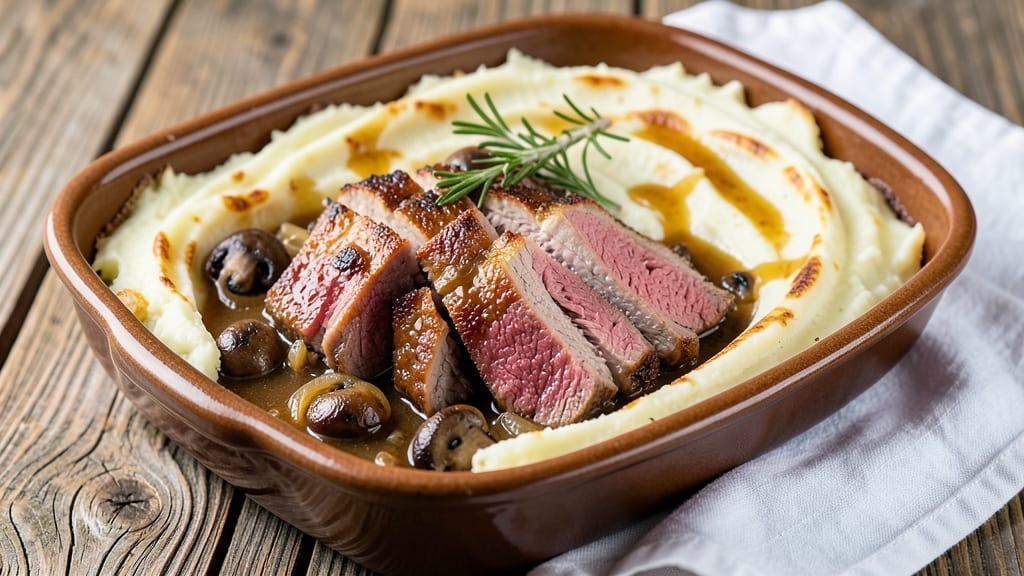
Transforming prime rib into a hearty shepherd's pie is where comfort food meets refined technique—slow-braised meat topped with a golden, crispy potato crown that seals in every rich flavor.
This recipe blends restaurant-quality depth with home-cooking simplicity, where proper searing and resting elevate the beef, while a perfectly textured potato topping delivers that satisfying crunch.
The key lies in balancing tender meat with a gravy so rich it clings to every bite, all finished under a crust that's both sturdy and delicate.
The process begins with searing prime rib to develop a deep, caramelized crust before slow-baking it until fork-tender—this takes patience, but the result is meat that practically melts. Meanwhile, the potato topping requires precise layering and baking to achieve that signature crispy exterior while keeping the interior fluffy.
Every step builds toward a dish that feels indulgent yet approachable, perfect for special occasions or a cozy Sunday supper.
What you'll end up with is a shepherd's pie that delivers on all fronts: tender, flavorful beef swimming in savory gravy, crowned with a potato topping that's crispy enough to stand up to the rich filling.
The aroma alone will draw everyone to the table, and the first bite confirms why this dish is a showstopper—comforting, elegant, and impossible to resist. Here's how to bring it together flawlessly.
This recipe scales beautifully for gatherings, and the techniques translate well to other cuts of beef or even vegetarian adaptations.
Whether you're serving a holiday feast or simply craving a satisfying meal, the same principles apply: slow-cooked meat, rich gravy, and a potato topping that's crispy on top and creamy beneath. Let's get started on creating your perfect shepherd's pie.
Ingredients for prime rib shepherd's pie
Six ingredients transform prime rib into a restaurant-worthy shepherd's pie with rich, slow-braised meat and crispy potato crown.
| Ingredient | Amount | Notes |
|---|---|---|
| Prime Rib Roast 🥩 | 3 lb | Bone-in, 1-inch thick slices |
| Russet Potatoes 🥔 | 4 lbs | Yukon gold for creamier texture |
| Heavy Cream 🥛 | 1 cup | Full-fat for richness |
| Whole Milk 🥛 | ½ cup | Warmed for smoother mash |
| Unsalted Butter 🧈 | ½ cup | Cold, cubed for topping |
| Yellow Onion 🧅 | 1 whole | Diced, yellow or red |
| Garlic Cloves 🧄 | 6 cloves | Minced, fresh preferred |
| Beef Broth 💧 | 2 cups | Homemade or high-quality store-bought |
| Red Wine 🍷 | ½ cup | Bold dry variety like Cabernet |
| Tomato Paste 🍅 | 2 tbsp | Smooth, not chunky |
| Fresh Thyme 🌿 | ¼ cup | Leaves only, stems removed |
| Fresh Rosemary 🌿 | ¼ cup | Finely chopped, fresh preferred |
| Diamond Crystal Kosher Salt 🧂 | 1 ½ tsp | For seasoning, adjust to taste |
| Freshly Ground Black Pepper 🌶️ | 1 tsp | Coarsely cracked |
| Extra-Virgin Olive Oil 🫒 | 2 tbsp | For searing meat |
The prime rib is the foundation—look for bone-in cuts at Whole Foods or your butcher shop for optimal flavor and texture. A 1-inch thickness ensures even cooking without drying out. If buying pre-sliced, check for good marbling (white fat streaks) which guarantees tenderness. For the potatoes, Russets are ideal for their starchiness, but Yukon golds create a creamier mash. The heavy cream and whole milk should be full-fat to achieve that velvety potato topping texture that contrasts perfectly with the meat's richness. Always source fresh herbs from the grocery store's produce section—they'll be more vibrant than dried and make a noticeable difference in flavor.
No red wine? Beef broth with a splash of balsamic vinegar works beautifully, though you'll lose some depth. Substitute dried thyme at one-third the amount if fresh isn't available, but fresh rosemary is harder to replace—lemon zest can add brightness if needed. For the tomato paste, Trader Joe's sells convenient squeeze tubes that eliminate waste. The olive oil should be extra-virgin for searing—regular olive oil lacks the flavor complexity. If you're short on time, pre-minced garlic works, but fresh garlic cloves give you more control over the flavor intensity. The butter for the topping should be cold when added to create that signature crispy crust.
Prime rib reheats best at 350°F for 15 minutes covered with foil, then uncovered for crisping. The potato topping keeps well for 3 days in the fridge—reheat covered to prevent drying. For longer storage, freeze portions for up to 3 months, though the texture may change slightly. The gravy can be made ahead and reheated separately, then combined with the filling just before baking the topping. This dish tastes even better the next day as flavors meld, so double the recipe for leftovers—it's that good.
Why You'll Love This Recipe
- One-Pan Magic: I swear by this recipe on busy nights—just sear the prime rib, mash those potatoes with butter and cream, and bake. No chopping veggies, no extra pans, just done.
- Rich Without Effort: The prime rib stays juicy and tender while the creamy mashed potatoes caramelize on top. That buttery, savory contrast? It’s the kind of dish that makes you pause mid-bite.
- Sunday Supper Star: Between us, this is my go-to for game days, family dinners, or when I’m craving something hearty but still feel like I put in effort. (Yes, even on a Tuesday night.)
- Leftovers That Don’t Suck: Honestly, the second day is even better—the potatoes get crispier, the meat more flavorful. I make a double batch because reheating it is chef’s kiss (and saves me from takeout).
Step-by-step instructions for prime rib shepherd's pie
Master this rich, hearty dish with tender prime rib and golden potato topping every time.
Sear and Braise the Prime Rib Roast
Heat a Dutch oven over medium-high heat and add the 2 tablespoons extra-virgin olive oil. Once shimmering, place the 3 lb prime rib roast, fat-side down, and sear for 4-5 minutes until deeply browned. Flip and sear the other side for another 3-4 minutes. Remove the meat and set aside.
In the same pot, add the 1 whole yellow onion and 6 cloves garlic cloves, cooking for 3 minutes until softened. Stir in the 2 tablespoons tomato paste and cook for 1 minute until darkened. Deglaze with the 0.5 cup red wine, scraping up browned bits, then add the 2 cups beef broth, 0.25 cup fresh thyme, and 0.25 cup fresh rosemary.
Return the prime rib to the pot, cover, and transfer to a 325°F oven. Braise for 2.5-3 hours until fork-tender. Remove the meat, shred or slice it, and return it to the sauce. Season generously with 1.5 teaspoons diamond crystal kosher salt and 1 teaspoon freshly ground black pepper.
Prepare the Creamy Potato Topping
While the meat braises, peel and dice the 4 lbs russet potatoes into ½-inch cubes. Boil them in salted water for 10-12 minutes until fork-tender, then drain well. In a large bowl, mash the potatoes until smooth, then stir in the 1 cup heavy cream, 0.5 cup whole milk, and 0.5 cup unsalted butter.
Season the potato mixture with an additional 0.5 teaspoon diamond crystal kosher salt and 0.5 teaspoon freshly ground black pepper. The topping should be creamy but not watery—if too thick, add a splash of warm milk. Spread the mixture evenly over the braised prime rib in the Dutch oven.
Bake Until Golden and Crispy
Transfer the Dutch oven to a 400°F oven and bake for 25-30 minutes until the potato topping is deep golden brown and crispy on top. Watch closely in the last 5 minutes—the edges should be caramelized and the center should be bubbling.
Let the shepherd's pie rest for 10 minutes before serving. The residual heat will finish cooking the center while the top stays crisp. Garnish with extra chopped rosemary and serve with a sharp red wine to complement the rich flavors.
Pro Tips For Making Prime Rib Shepherd'S Pie
- SEAR THE PRIME RIB FIRST: I used to skip this step, thinking the potatoes would handle the browning—but no. A quick 3-4 minute sear in a screaming-hot pan with butter and oil locks in flavor and gives the crust that restaurant-quality depth. Just don’t overcrowd the pan, or you’ll steam the meat instead of searing it.
- BOIL POTATOES UNTIL SOFT: Russets need to be fork-tender before mashing, not just "mostly cooked." I learned this the hard way when my top layer turned gummy. Boil them in salted water until a knife slides in like butter—about 15-20 minutes for large potatoes—and drain thoroughly before mashing.
- DON’T SKIP THE CREAM REST: Mixing heavy cream and milk into the mashed potatoes too soon makes them watery. Instead, heat the cream separately until it’s steaming but not boiling, then fold it in after the potatoes are mashed. The residual heat thickens the mixture, and the texture stays velvety—not gluey.
- USE A THIN POTATO LAYER: A thick potato crust means soggy bottoms. Spread the mashed potato mixture in a thin, even layer—about ¼-inch thick—over the prime rib filling. Press it down gently with a fork to seal the edges, then bake until golden. Yes, it’ll look skimpy, but it’ll stay crisp.
Make-ahead tips for this recipe
Prep Ahead for Meat
Shred or slice the prime rib up to 2 days in advance and store it in its braising liquid in an airtight container in the fridge.
The flavors deepen as it rests, and reheating is a breeze—simply warm the meat and sauce together in a skillet over medium-low heat for 10-15 minutes. I like to add a splash of beef broth if the sauce thickens too much during storage. 💪
Pre-Mashed Potatoes
Make the potato topping 1 day ahead and store it in an airtight container at room temperature. This gives the starches time to settle, making it easier to spread evenly later.
If you prefer, chill the topping overnight—it’ll be even creamier. Just reheat it gently in the microwave for 2-3 minutes before assembling, stirring occasionally to restore its smooth texture. ❄️
Gravy Make-Ahead
Prepare the gravy 2 days in advance and store it in a sealed jar in the fridge. When ready to assemble, simply reheat the gravy in a saucepan over medium heat until warmed through, then stir it into the braised meat.
The gravy’s richness will keep the filling moist and flavorful, even after reheating. For extra depth, add a pinch of fresh rosemary when reheating. 💫
Assemble the Day Of
Layer the cooled prime rib and reheated gravy in a 9x13-inch baking dish, then top with the chilled potato mixture. This ensures the topping stays crispy while the filling stays hot.
Bake at 400°F for 25-30 minutes—the contrast of warm filling and crispy top is what makes this dish shine. I always add a sprinkle of flaky sea salt right before serving for that restaurant-worthy finish. 🔥
Freezer-Friendly Filling
For longer storage, assemble the filling (meat + gravy) without the potato topping and freeze it in a freezer-safe bag for up to 3 months. When ready to serve, thaw overnight in the fridge, then reheat the filling and top with freshly mashed potatoes.
This method preserves the meat’s tenderness and the gravy’s richness, making it perfect for last-minute gatherings. 🥶
Portion for Leftovers
Shepherd’s pie reheats beautifully—portion individual servings into ramekins before baking the topping. Store leftovers in the fridge for 3 days or freeze for 3 months. To reheat, cover with foil and warm at 350°F for 15 minutes, then uncover and broil for 2-3 minutes to restore crispiness.
The flavors only get better with time! 🍽️
Nutrition facts
Frequently asked questions
Can I use a different cut of beef instead of prime rib?
Chuck roast or short ribs work beautifully—they're more affordable and still develop rich, tender flavors when braised. For a leaner option, try top round, but it requires extra care to prevent drying out. The key is selecting a cut with good marbling to stay juicy during the long braising time.
How do I get the potato topping extra crispy?
For that perfect golden crust, spread the potato mixture evenly and use a fork to create texture before baking. Brush the top with a little extra milk or melted butter before the final 5 minutes of baking. Broiling for 1-2 minutes at the end also adds extra crispiness while keeping the inside creamy.
Can I make this recipe in a slow cooker?
Yes, but with adjustments. Brown the meat first, then transfer everything to a slow cooker and cook on low for 6-8 hours. For the potato topping, mash it separately and spread it over the filling during the last 30 minutes of cooking, covered with foil, then uncover and broil to crisp. The slow cooker method works best for the meat but requires extra attention to the potato topping.
What's the best way to reheat leftovers?
Cover with foil and warm at 350°F for 15 minutes, then uncover and broil for 2-3 minutes to restore crispiness. For microwave reheating, cover with a damp paper towel and heat in 30-second intervals, stirring between each. The potato topping will soften slightly but remains delicious.
Can I make this vegetarian?
You can adapt it with plant-based alternatives like mushrooms, lentils, or jackfruit for texture. Use vegetable broth and swap the beef for hearty vegetables or protein substitutes. The potato topping and gravy techniques remain the same—just adjust seasonings to complement the new filling. The dish will still be rich and satisfying!