
Desserts
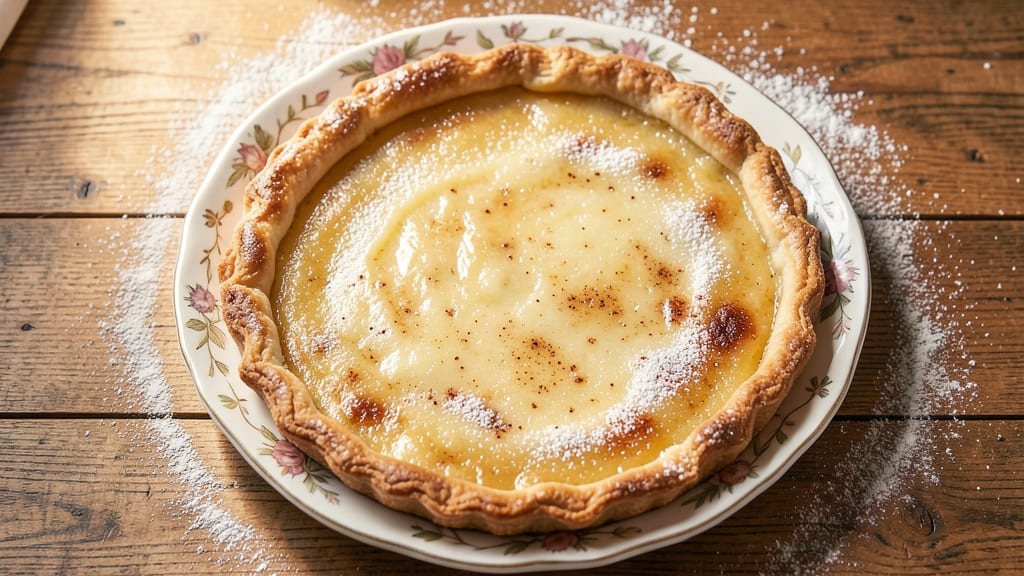
Grandma's egg custard pie recipe brings back the comforting aroma of vanilla and butter that filled my childhood kitchen every holiday season. This classic dessert features a flaky, golden crust filled with velvety vanilla custard that swirls beautifully when baked—just like the one my grandmother made for family gatherings.
The secret lies in tempering the eggs properly and baking the crust perfectly before adding the filling.
What makes this recipe special is its balance of simplicity and tradition. You'll need just a few high-quality ingredients—flour, butter, eggs, milk, and vanilla—to create a dessert that tastes like a warm hug.
The custard filling is silky smooth, with no lumps or curdling, thanks to the tempering technique I've perfected over years of baking. This method ensures a creamy texture that melts in your mouth with every bite.
The result is a pie with a beautifully golden crust that's crisp yet tender, and custard so rich and smooth it practically dissolves on your tongue. The vanilla swirls create an elegant presentation that makes this dessert perfect for special occasions or family dinners.
Once you try this recipe, it'll become a staple in your holiday baking rotation.
This pie is especially magical when served warm with a scoop of vanilla ice cream or a dollop of whipped cream. The contrast of temperatures makes each bite even more indulgent. Let's get started on creating this nostalgic family favorite that'll bring warmth to your kitchen too.
Ingredients for grandma's egg custard pie
Simple pantry staples transform into Grandma's legendary egg custard pie with golden crust and velvety swirls.
| Ingredient | Amount | Notes |
|---|---|---|
| All-Purpose Flour 🌾 | 2 ½ cups | Sifted for flaky crust |
| Unsalted Butter 🧈 | 1 cup | Cold, cubed for crust |
| Granulated Sugar 🍚 | ¼ cup | Plus 1 tbsp for sprinkling |
| Large Eggs 🥚 | 4 whole | Room temperature for custard |
| Whole Milk 🥛 | 2 cups | Full-fat for creaminess |
| Pure Vanilla Extract 🌸 | 2 tsp | High-quality, real vanilla |
| Salt 🧂 | ½ tsp | Fine sea salt preferred |
| Ice Water 💧 | ½ cup | For pie dough |
| Cornstarch 🌾 | 2 tbsp | For silky custard |
| Vanilla Sugar 🍚 | 2 tbsp | Optional for extra flavor |
| Ground Cinnamon 🌿 | ¼ tsp | For dusting crust |
| Heavy Whipping Cream 🥛 | ½ cup | For swirling (optional) |
The butter and flour are your crust foundation. Use European-style butter if you can—it has more fat for flakiness. Most grocery stores carry it near the regular butter, or grab it at Whole Foods if you're unsure. The key is keeping everything cold: cut the butter into tiny cubes and chill your mixing bowl. For the vanilla, Madagascar bourbon vanilla adds depth, but pure vanilla extract works perfectly fine. I always buy extra because it's worth splurging on. The eggs? Room temperature makes all the difference—no one likes curdled custard.
No vanilla extract? Vanilla bean paste works too, or scrape seeds from a vanilla bean. Short on butter? Lard or shortening keeps the crust flaky, but butter's flavor can't be beat. The milk can be substituted with half-and-half or evaporated milk for extra richness. For the swirls, I use heavy whipping cream—Trader Joe's has the best-priced tubs. If you're gluten-free, swap the flour for a 1:1 gluten-free blend, but add an extra tablespoon since they pack differently. The cornstarch is non-negotiable—it's what gives that silky texture.
This pie keeps beautifully—3 days in the fridge wrapped tightly, or 2 months in the freezer if you want to make it ahead. Reheat slices in the oven at 350°F for 10 minutes until warmed through. I always make a double batch—one for now, one for later. The crust stays crisp for hours if you store it separately, so you can assemble it fresh before serving. Leftovers? Warm them up with a sprinkle of cinnamon and a dollop of whipped cream—tastes just like Grandma's.
Why You'll Love This Recipe
- Foolproof Foundation: I swear by this crust—just flour, butter, and a pinch of salt. No chilling, no fuss, and it holds together like a dream, even when I forget to let it rest.
- Velvet Smooth Magic: That egg-milk custard? It’s ridiculously good—silky, not too sweet, with just enough vanilla to make you close your eyes. Honestly, the first time I tasted it, I immediately doubled the recipe.
- Breakfast or Brunch Hero: Serve it warm for breakfast with a sprinkle of cinnamon or save it for brunch with berries. My college roommate used to beg for leftovers, and now my coworkers ask for the recipe every time I bring it to the office.
- Budget-Friendly Staples: Five ingredients, zero specialty items. The eggs and milk stretch further than you’d think, and the crust uses pantry basics. I’ve made this for potlucks, holiday dinners, and lazy Sundays—it’s my secret weapon for feeding people without breaking the bank.
Step-by-step instructions for Grandma's egg custard pie
Here's how to create that perfect balance of flaky crust and velvety custard your grandma would be proud of.
Prepare the Perfect Pie Crust
In a large bowl, combine the 2.5 cups all-purpose flour with the 0.5 tsp salt and 0.25 tsp ground cinnamon. Cut in the 1 cup cold unsalted butter using a pastry cutter or your fingers until the mixture resembles coarse crumbs with pea-sized butter pieces. This texture is crucial—it ensures flaky layers rather than tough dough.
Gradually add the 0.5 cup ice water, one tablespoon at a time, mixing gently with a fork just until the dough comes together. Avoid overmixing, which develops gluten and makes the crust tough. Shape the dough into a disk, wrap in plastic, and chill for at least 1 hour (or up to 24 hours). This resting period relaxes the gluten and makes rolling easier.
Create the Vanilla Custard Filling
In a medium bowl, whisk together the 4 whole large eggs, 0.25 cup granulated sugar, 2 tbsp cornstarch, 2 tsp pure vanilla extract, and 0.5 tsp salt until smooth and well combined. The mixture should be pale yellow and slightly thickened. This is your custard base, and getting it smooth now prevents lumps later.
In a separate bowl, warm the 2 cups whole milk over medium heat until it's steaming but not boiling—about 160°F. Slowly pour the warm milk into the egg mixture while whisking constantly to temper the eggs. This gradual warming prevents the eggs from scrambling. Return the mixture to the warm (not hot) pot and cook over medium-low heat, stirring constantly with a wooden spoon, until it thickens enough to coat the back of the spoon—about 5-7 minutes. The custard should be silky, not grainy.
Assemble the Pie
Preheat your oven to 375°F. Roll out the chilled dough on a floured surface to fit a 9-inch pie dish, about 1/8-inch thick. Transfer to the dish and trim the edges, leaving a 1-inch overhang. Sprinkle the bottom crust with 1 tablespoon granulated sugar and 1 tbsp vanilla sugar for extra flavor. Pour the custard filling into the crust, filling it to about 1/2 inch from the top.
Roll out the remaining dough for the top crust. Cut a few small slits in the center to allow steam to escape. Brush the top crust lightly with water, then sprinkle with the remaining 1 tablespoon granulated sugar and 1 tbsp vanilla sugar. Place the top crust over the filling and crimp the edges together with a fork or your fingers. For the signature swirl, use a sharp knife to cut 1/2-inch wide strips radiating from the center to the edge, then twist each strip gently.
Bake to Golden Perfection
Place the assembled pie on a baking sheet lined with parchment paper to catch any drips. Bake for 45-50 minutes until the crust is golden brown and the filling is set but still slightly jiggly in the center. If the edges brown too quickly, cover them with aluminum foil. The custard should be thick but not dry—it will continue setting as it cools.
Remove the pie from the oven and let it cool completely on a wire rack for at least 2 hours before slicing. This resting time allows the custard to fully set and prevents it from running when you serve it. For extra decadence, whip the 0.5 cup heavy whipping cream to soft peaks and dollop it on top of each slice before serving.
Serve with Confidence
Slice the pie into 8 equal wedges using a sharp knife dipped in hot water and wiped clean between cuts. The filling should be silky smooth with just a hint of vanilla aroma wafting from each slice. Serve at room temperature for the best texture—this lets the custard reach its ideal consistency. Store any leftovers in the refrigerator for up to 3 days, though I doubt it will last that long!
Pro Tips For Making Grandma'S Egg Custard Pie
- Preheat That Dish: Slide your pie dish into a 350°F (175°C) oven before mixing anything—this guarantees the crust sets instantly when you pour in the custard. I learned this the hard way when my first batch leaked like a sieve because the dish was cold.
- Whisk Eggs Like Mad: Beat those eggs and milk until the mixture is smooth as silk—no streaks, no lumps. A hand mixer saves your arm, but if you’re doing it by hand, go for 3 solid minutes. Lumpy custard curdles faster than you can say “overbaked.”
- Skip the Crowding: Resist the urge to pile the crust edges high—press them even with the rim and crimp lightly. A thick edge traps steam and turns soggy, while a neat, flat border bakes golden and crisp.
- Temper the Custard: Warm the milk to body temperature (about 100°F/38°C) before mixing it with eggs—cold milk shocks the eggs and makes them scramble instead of set. I used to dump in cold milk straight from the fridge. Don’t be like me.
Serving suggestions for leftovers
Classic Presentation
Serve warm slices on elegant gold-rimmed dessert plates to highlight the golden crust and creamy custard. I love arranging 3-4 slices per plate with a small scoop of vanilla bean ice cream on the side—this keeps the pie from feeling too heavy while adding a cool contrast.
For a nostalgic touch, dust each slice lightly with ground cinnamon or a pinch of vanilla sugar before serving. 🌸
Ice Cream Pairings
Vanilla ice cream is the obvious choice, but I also adore pairing this pie with coffee-flavored ice cream or caramel swirl for a grown-up twist. If you're feeling fancy, serve a small espresso martini alongside for dipping—it complements the custard's richness beautifully.
For a lighter option, try coconut sorbet to cut through the richness without overwhelming the pie's delicate flavors.
Family-Style Serving
Grandma always served this pie family-style in the center of the table with a whipped cream pitcher and cinnamon sticks for stirring. This encourages sharing and makes the dessert feel extra special.
I recommend using a ceramic pie dish that stays warm longer, and place it on a wooden board for a rustic touch. Add fresh berries or caramelized apples on the side for a fresh contrast to the custard's creaminess.
Coffee Companion
A cup of hot black coffee or chai tea is the perfect pairing to cleanse your palate between bites. For a decadent after-dinner treat, serve with a small glass of Irish cream or Baileys—just a 1-ounce pour enhances the vanilla flavors without overpowering them.
If you prefer non-alcoholic options, spiced apple cider or chocolate milk works wonderfully with the custard's sweetness. ☕
Garnishing Touches
Before serving, I like to add a few drops of vanilla extract on top of each slice for an extra aroma boost. For visual appeal, sprinkle with crushed pistachios or toasted coconut flakes—both add crunch and a subtle nutty flavor.
A drizzle of caramel sauce or chocolate ganache elevates the presentation to restaurant-quality while keeping the prep simple. The key is to keep garnishes minimal so the pie remains the star of the show.
Make-Ahead Serving
If you're serving this pie at a gathering, assemble it a day ahead and refrigerate until ready to bake. This allows the flavors to meld beautifully. For a warm dessert, bake just before serving and let it sit at room temperature for 10-15 minutes before slicing.
If serving cold, chill for at least 2 hours after baking to ensure the custard sets perfectly. I always bring this pie to holiday dinners—it’s the dish everyone asks for seconds on! 💛
Nutrition facts
Frequently asked questions
Why does my custard filling look grainy?
Grainy custard usually means the eggs weren't properly tempered or the heat was too high. Always whisk the warm milk into the eggs gradually while stirring constantly, and cook over medium-low heat without letting it boil. The custard should thicken smoothly to a creamy consistency, not form lumps. For extra silkiness, strain it through a fine-mesh sieve before pouring into the crust.
Can I make this pie without a pie dish?
Yes! You can use a 9-inch cast-iron skillet or even a deep oven-safe dish. Just ensure it has high sides to contain the filling. For a rustic look, try a free-form tart shape on a baking sheet, but you'll need to blind-bake the crust longer (about 15 minutes) to prevent puffing. The custard will still set beautifully in any oven-safe container.
How do I fix a soggy bottom crust?
Prevent soggy crusts by blind-baking the bottom crust for 10-12 minutes at 375°F before adding the filling. Sprinkle dried breadcrumbs or crushed cornflakes on the bottom before pouring in the custard—this creates a barrier. If your crust is already soggy, chill the pie for 1 hour before slicing to firm up the filling slightly. For next time, bake the assembled pie on a preheated baking sheet with a layer of parchment underneath.
What's the best way to reheat leftover slices?
Warm slices in the oven at 350°F for 8-10 minutes until heated through. For a quick fix, microwave for 20-30 seconds (covered with a damp paper towel to prevent drying). To revive the texture, brush the crust with a little melted butter while reheating. Never microwave without covering—it makes the custard rubbery.
Can I substitute cornstarch with flour?
You can use flour, but the texture will be slightly denser. Replace the 2 tbsp cornstarch with 2 tbsp all-purpose flour, but whisk it more thoroughly into the egg mixture to prevent clumping. The custard will still be creamy, though cornstarch creates that signature silky mouthfeel. For a gluten-free option, use arrowroot powder in a 1:1 ratio.