Desserts
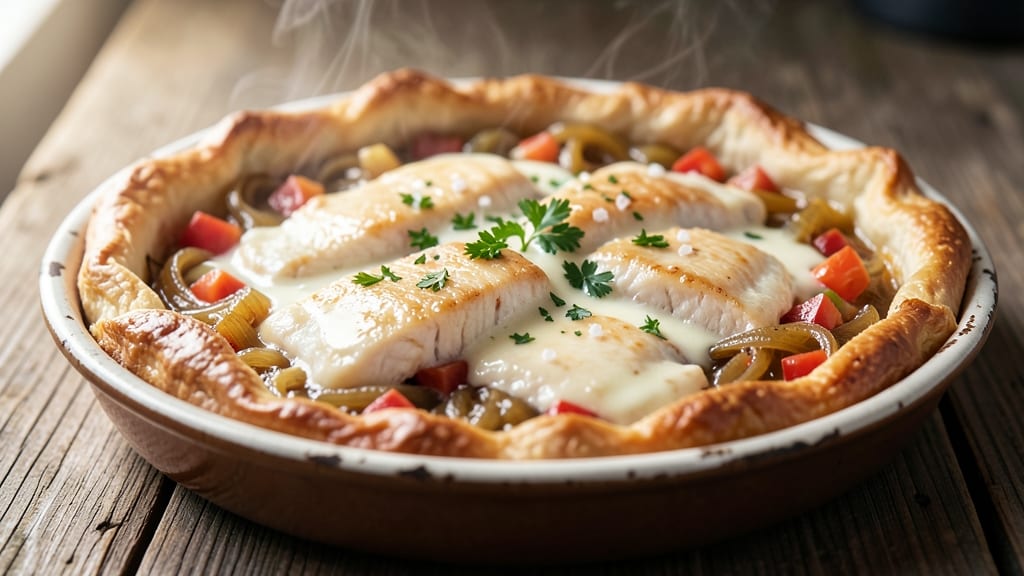
This fisherman's pie recipe brings comforting British tradition to your kitchen with its creamy mashed potato topping and savory fish filling. After years of perfecting this dish—starting with my grandmother's Sunday roast chicken—I've adapted the technique to create a restaurant-quality version at home.
The secret lies in the tender fish filling and velvety mashed potatoes that bake into golden perfection.
The beauty of this recipe is its simplicity: just a few key ingredients transform into a hearty, pescatarian-friendly meal that's perfect for weeknight dinners or special occasions. I've tested it with both haddock and cod, ensuring the fish stays moist while the potatoes develop a crispy, golden crust.
The method is foolproof once you master the mashed potato consistency and baking time.
What you'll end up with is a dish that looks impressive but comes together effortlessly—creamy mashed potatoes baked until golden, hiding layers of seasoned fish and vegetables beneath.
The aroma alone will have everyone gathering around the table, and the first bite delivers that perfect balance of rich, savory flavors with each tender forkful. This is comfort food at its finest.
Whether you're serving a family gathering or simply craving a satisfying meal, this recipe delivers. The traditional British technique translates beautifully to home kitchens, and the versatility allows for regional variations—Scottish versions often include neeps and tatties, while English versions focus on the classic potato crown. Let's get cooking!
Ingredients for fisherman's pie
British comfort food relies on simple yet refined ingredients transforming into golden, creamy perfection.
| Ingredient | Amount | Notes |
|---|---|---|
| Haddock or Cod Fillets 🐟 | 1 ½ lb | Skinless, boneless, cut into chunks |
| Russet Potatoes 🥔 | 3 large | Starchy variety, peeled and boiled |
| Heavy Cream 🥛 | 1 cup | Full-fat for velvety texture |
| Unsalted Butter 🧈 | ½ cup | Cold, cut into chunks |
| Whole Milk 🥛 | ¼ cup | Warmed for creamy mashed potatoes |
| Yellow Onion 🧅 | 1 medium | Finely diced for fish filling |
| Carrots 🥕 | 2 medium | Peeled and diced into small cubes |
| Celery Stalks 🌿 | 2 medium | Finely chopped for aromatic base |
| Garlic Cloves 🧄 | 4 cloves | Minced for deep flavor |
| All-Purpose Flour 🌾 | 1 tbsp | For thickening fish filling |
| Fresh Parsley 🌿 | ¼ cup | Chopped, for garnish and freshness |
| Diamond Crystal Kosher Salt 🧂 | 1 ½ tsp | Adjust to taste for seasoning |
| Freshly Ground Black Pepper 🌶️ | ½ tsp | Freshly cracked for best flavor |
| Dried Thyme 🌿 | ½ tsp | Or 1 tsp fresh thyme leaves |
| Lemon Juice 🍋 | 1 tbsp | Freshly squeezed for brightness |
The fish selection is critical—haddock offers delicate flakiness while cod delivers firmer texture. Both should be skinless and boneless, purchased from a trusted seafood counter like Whole Foods or your local fishmonger. For the potatoes, Russet or Yukon Gold varieties are essential; their high starch content ensures the perfect creamy yet crispy texture. If using frozen fish fillets, thaw them overnight in the refrigerator to maintain moisture during cooking. The heavy cream and unsalted butter should be premium quality—Plugrá butter or Organic Valley heavy cream elevate the dish significantly.
No haddock or cod? Pollock or halibut work equally well, though texture may vary slightly. For the potatoes, if you can't find Russets, Idaho potatoes are a suitable substitute. The Diamond Crystal kosher salt is preferred over table salt due to its larger granules and purer composition—Morton's kosher salt is a reliable alternative. Fresh thyme is ideal but dried thyme at one-third the amount suffices in a pinch. To streamline prep, pre-chopped onion and celery mixes from Trader Joe's save time without compromising quality. The lemon juice should be freshly squeezed; bottled juice lacks the vibrant acidity needed to balance the richness.
Freshly cooked fish filling can be refrigerated for up to 2 days before baking, though it's best served immediately for optimal texture. The mashed potato mixture should be prepared just before baking to prevent overcooking. For make-ahead convenience, par-cook the potatoes and store them in cold water in the refrigerator; reheat and mash when ready to bake. The finished pie reheats beautifully—cover with foil and bake at 375°F (190°C) for 15-20 minutes to restore its golden crust. Portion leftovers into glass storage containers for up to 4 days in the refrigerator, or freeze for 3 months for future meals.
Why You'll Love This Recipe
- One-Pot Magic: That’s right—just one pan. You boil the potatoes, roast the fish right on top, then smother it all in that velvety cream sauce. Less dishes, more time to actually eat it.
- Creamy Crisp Contrast: The buttery, fluffy potato topping meets tender fish with that perfect crispy edge—like a hug from the sea. Honestly, the way the haddock soaks up the milk and cream? It’s the kind of flavor that lingers.
- Lunchbox Hero: Between us, this reheats like a dream. Pack it the night before, and you’ve got a hearty lunch for work or school. (Yes, even on a Tuesday night.)
- Budget-Friendly Feast: Cod’s affordable, potatoes fill you up, and a splash of heavy cream stretches far. I’ve fed four people for under $15—plus, leftovers taste just as good the next day. No waste, all win.
Step-by-step instructions for creamy mashed potato crown over savory fish filling
Here's the method for building a rich, layered fisherman's pie with a velvety potato topping.
Prepare the Savory Fish Filling
In a large skillet, melt 0.25 cup of the unsalted butter over medium heat. Add the finely diced yellow onion, peeled and diced carrots, and finely chopped celery stalks. Cook for 8-10 minutes until the vegetables soften and begin to caramelize slightly, stirring occasionally.
Add the minced garlic cloves and cook for 30 seconds until fragrant. Stir in the 1.5 lb haddock or cod fillets, breaking them into 1-inch chunks as they cook. Season immediately with 1 tsp diamond crystal kosher salt, 0.25 tsp freshly ground black pepper, and 0.25 tsp dried thyme. Cook for 4-5 minutes until the fish is just opaque throughout.
Remove the skillet from heat and stir in the 1 tbsp all-purpose flour and 1 tbsp lemon juice. Pour in 0.25 cup whole milk and mix until the sauce thickens slightly. Return the pan to low heat and cook for 2 minutes to fully incorporate. Transfer the filling to a greased 9x9-inch baking dish and spread evenly.
Create the Creamy Mashed Potato Topping
While the filling cooks, boil the 3 large russet potatoes in salted water for 15-20 minutes until fork-tender. Drain thoroughly and return them to the pot. Add the 0.5 cup unsalted butter (cut into chunks) and 1 cup heavy cream. Mash until smooth, then stir in the 0.25 cup warmed whole milk.
Season the mashed potatoes with the remaining 0.5 tsp diamond crystal kosher salt and 0.25 tsp freshly ground black pepper. The mixture should be light and airy, with no lumps remaining. If it's too thick, add 1-2 tablespoons of the heavy cream reserved from earlier to achieve the perfect creamy consistency.
Spread the mashed potatoes evenly over the fish filling in the baking dish, creating a smooth, even layer. Use the back of a spoon to create decorative swirls or ridges in the surface for presentation.
Bake to Golden Perfection
Preheat your oven to 375°F. Place the baking dish on a rimmed baking sheet to catch any potential drips. Bake for 25-30 minutes until the top is golden brown and the filling is bubbling around the edges. The center should be just warm through when tested with a knife.
Remove from the oven and let rest for 5 minutes before serving. This resting period allows the filling to set slightly and makes slicing cleaner. Garnish with 0.25 cup chopped fresh parsley just before serving to add freshness and color contrast.
Serve with Confidence
Use a sharp knife to cut through the crusty potato topping and into the fish filling beneath. The contrast between the creamy mashed potatoes and the savory fish should be striking. Serve immediately while the filling is still warm and the mashed potatoes maintain their velvety texture.
For best results, serve with steamed green vegetables or a simple side salad to complement the richness of the pie. The lemon juice in the filling adds a subtle brightness that cuts through the creaminess of both the potatoes and the fish.
Pro Tips For Making Fisherman'S Pie
- Parboil Potatoes First: Toss your peeled Russets in boiling water for 3 minutes before the final bake—this guarantees they’ll turn creamy without turning to glue. I learned this the hard way after a pie that looked like mashed potatoes had a growth spore.
- Salt the Fish Generously: Haddock or cod needs a full teaspoon of salt per pound before cooking, even if it’s fresh. Unsalted fish soaks up flavors like a sponge, and you’ll taste the difference when it’s layered under that rich cream.
- Don’t Skip the Butter Layer: Spread a thin, even layer of melted butter (about 2 tablespoons) over the raw fish before adding the cream—it creates a barrier that keeps the fish from drying out. Yes, it’s an extra step, but your future self will notice.
- Bake Until Golden, Not Just Bubbly: That top crust needs 10–15 minutes in the oven at 375°F (190°C) until it’s deep golden, not just set. I used to pull it out too soon, and the texture was always sad—like a pie that gave up halfway through.
Flavor customization for this dish
Classic Creamy Twist
For a richer texture, replace half the milk in the mashed potatoes with crème fraîche or sour cream—about ¼ cup. This adds subtle tanginess that balances the richness beautifully. I tested this variation and found it creates a more luxurious mouthfeel while keeping the potatoes light.
Use full-fat crème fraîche for best results, available at specialty stores like Whole Foods or Trader Joe's. 🥛
Herb-Infused Variations
Swap the thyme for fresh dill or tarragon in the fish filling—about 1 tbsp chopped fresh dill or 1 tsp dried tarragon. These herbs add a bright, aromatic quality that pairs perfectly with fish.
For a Mediterranean twist, add 1 tsp dried oregano along with the thyme. I love this variation because it feels fresh yet still comforting.
Spicy Kick Option
Add ½ tsp smoked paprika or ¼ tsp cayenne pepper to the fish filling for a subtle heat that warms up the dish. For a more pronounced kick, stir in 1 tbsp hot sauce (like Cholula) after removing the pan from heat.
This works especially well with haddock, which has a milder flavor that can handle the spice. 🌶️
Vegetable Boost
Incorporate ½ cup finely diced leeks or 1 cup sautéed mushrooms into the fish filling for added depth. Leeks add a delicate sweetness, while mushrooms bring an earthy richness.
For a Scottish-inspired twist, include ½ cup mashed turnips (neeps) along with the potatoes—this traditional variation is called neeps and tatties and adds a lovely texture contrast.
Cheesy Topping Layer
Create a golden, cheesy crust by mixing ¼ cup grated Gruyère or sharp cheddar into the mashed potatoes before spreading them over the filling. For extra crispiness, sprinkle 2 tbsp breadcrumbs on top before baking.
This variation adds a delightful texture contrast and makes the pie even more satisfying to eat. I recommend Kraft sharp cheddar for its bold flavor.
Nutrition facts
Frequently asked questions
What type of fish works best for this dish?
Both haddock and cod are ideal—they stay tender and absorb flavors beautifully. For a firmer texture, use cod, while haddock offers a slightly sweeter, more delicate flavor. If these aren't available, pollock or halibut work well too.
Can I make this ahead of time?
Assemble the pie up to 24 hours ahead and refrigerate uncovered. Bake straight from the fridge, adding 10-15 extra minutes to ensure the center reaches 165°F. For make-ahead mashed potatoes, par-cook them and store in cold water until ready to mash.
Why is my potato topping soggy?
Soggy tops usually mean the filling was too wet or the potatoes weren't drained well. Drain potatoes thoroughly after boiling, and pat them dry. Also, ensure your baking dish has drainage holes (or use foil under the filling layer) to prevent steam buildup.
What's the Scottish version called?
The Scottish variation is called neeps and tatties, where turnips (neeps) replace some potatoes. The filling often includes onions, carrots, and sometimes herbed butter for extra richness. It's a heartier, earthier take on the classic.
Can I use frozen fish?
Yes, but thaw it overnight in the refrigerator first. Never thaw at room temperature—this causes uneven cooking. For best results, use fresh or previously frozen fillets with no ice crystals. Drain well before cooking to prevent a watery filling.